Ancestral Places: Ballymote, Sligo, Ireland


Thomas was tried at Sligo in
March 1821 under the name of "Thomas Kaveny", and sentenced to 7 years for the crime of “house robbery.”
He was a native of Sligo, his calling was a reaper, and he
was described as aged 25, 5’ 6” tall, with brown hair, blue eyes and a fair and
freckled complexion.
Thomas arrived in Sydney on the 15 March 1822, on the ship “Southworth”.
Just prior to a planned visit to the UK, a distant cousin had told me in a brief phone conversation that she had found a request for Thomas to have his wife Mary, who was from a place called Emlaghfad, to be sent to join him in Australia.
Emlaghfad and Kilmorgan was a Roman Catholic parish in Sligo, and the parish has been re-named as Ballymote since my visit there.
Ballymote is an ancient market town within Emlaghfad parish, so I decided to spend a day
there.
The town is notable as the place where the "Book of Ballymote" was written in the 1390's. The book is now held at the Royal Irish Academy, and is considered to be a genealogical treasure trove.
The ruins of Ballymote Castle are nearby, and Wikipaedia describes the place as "the last and mightiest of the Norman castles in the province of Connacht."
I hired a car in Dublin and bought a map, and set off to drive across the country.
I spent the night at a B&B and wandered the town. There was no time for research, apart from chatting to a lady in the hardware store who was involved with the historical society. I must have mentioned family research to someone who directed me to the lady, because it wasn't really a place for tourists to visit. She was interested, but the surname Cavanagh or Kaveny was not familiar.


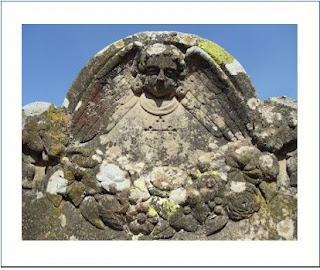
A very old cemetery is located nearby, which includes ruins which are thought to be of an earlier church.


Since 1994 I have gathered many useful records for Thomas Cavanagh, but none include any detail more specific than "Sligo" as his native place.
In 2013 I asked researcher Jill Roy to see if anything further could be found.
The reference mentioned in the 1990's was located, and cited as :
"Old fiche called Miscellaneous Convict Records – Index held at SAG (old typed card index put onto film in the 1980s.) This will be in a group of letters in a despatch asking for convicts wives to be sent at Government expense.”
This is the entry -


Ballymote Castle, built c1300. Photo credit: Chantel Clark, April 2019
LINKS:
Genuki: Emlaghfad including 1837 description
John Grenham website : Emlahgfad, Sligo
Ballymote Castle: a description
The History of Ballymote Church
Emlaghfad Parish Church 1818 (Ch of Ire.)
RC Parish Registers: Emlaghfad 1824-1881


Comments
Post a Comment